The Language of the Russian Revolutionary Painters:
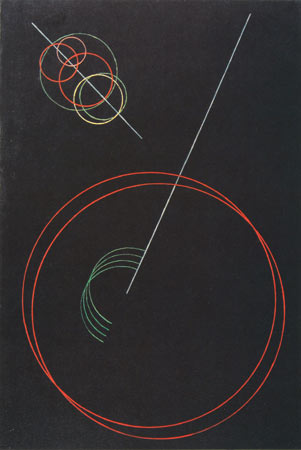
I have been recently captivated by the documentary series, produced by the BBC, recognizing the works and ambitions of the Soviet Arts in the 1920 Revolution.
There are some incredibly honest and insightful opinions towards the aspirations and desires of individual creative practitioners and their purpose.
Indeed, what strikes me the most is the relation to my own work in terms of the language of art and the visual enthusiasm of a piece in portraying that which cannot be conveyed in conventional terms. Artists such as Alexandr Rodchenko wanted their works to be void of beauty and conventional aspects to be judged upon. It was the means of demonstrating the ambition and power that was to come within the revolution; one that would surely affect the hearts and minds of the social quota at the time. Indeed for such artists the succession of ideals was more important than the means in which they were viewed or critiqued, and inherantly more so that the aesthetics of a piece.
This brings me to my own work. The ideal is of language and representing an outdated and weathered system; to aim to achieve something that is a radical alternative to our written scripts; something that can visually document an idea without being tied down by the traditions of language and text. This must take on a new aesthetic that uses conventional logic to attain an unconventional aim.
“The lily is beautiful, but the word ‘lily’ has been soiled and ‘raped.’ Therefore, I call the lily, ‘euy’ – the original purity is reestablished.”[1]
[1] Kruchenykh, loc cit. 67p.
http://www.bbc.co.uk/iplayer/episode/b00phtcz/The_Art_of_Russia_Smashing_the_Mould/

No comments:
Post a Comment